Posted in Book Review, Books

Reading Updates for Oct/Nov 2025

ADVENTURES OF HUCKLEBERRY FINN by Mark Twain
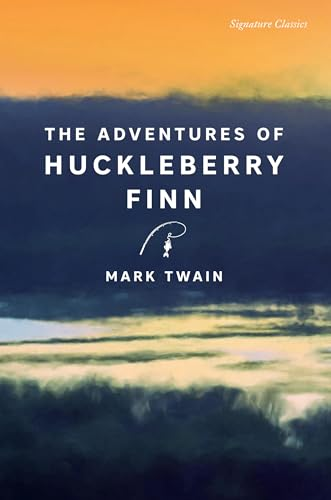
I honestly thought this was a re-read. However, I either never finished it earlier in my life or I completely forgot the last third of the book because I didn’t remember any of it. I chose to “re-read” it in preparation to read James by Percival Everett. The premise of that book is that it is written from the perspective of the runaway slave Jim in Huckleberry Finn. I know that for many the the dialogue and language in Twain’s book is problematic and harsh to modern day ears. Yet, if you can push beyond that aspect it really is a fascinating read and should remain, in my opinion, as considered a classic. In the end, what you find is that Twain is elevating Huck and Jim, who by society’s standards of the day are the least educated, morally suspect, and almost less than human characters to be seen as actually the most intelligent and righteous characters in the story. Their devotion and care to each other stands out. Their questioning and wrestling of how society works versus what they intuitively feel is right is prominent. I’m glad I re-read (well actually, finally finished) this book.

JAMES by Percival Everett
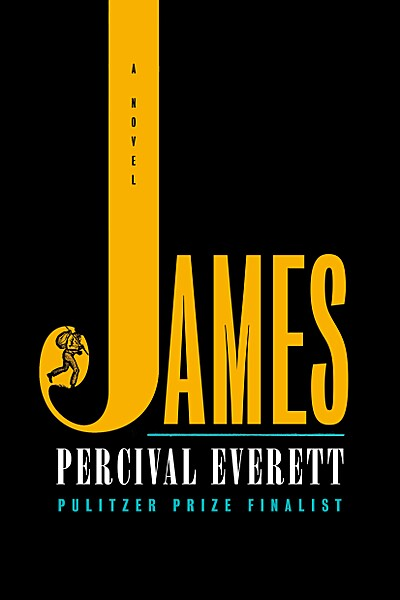
I am only about 1/3 of the way through this book. It is quite interesting to read it with Huckleberry Finn fresh in my mind. While it is not necessary to read Twain’s book prior to this one, I would recommend doing so if you get a chance. My journey to reading these two books came about because I saw that Percival Everett is scheduled to be one of the authors for the Lenoir-Rhyne Visiting Writer’s series in January of 2026. I am planning to attend that event and wanted to read this book prior to that. I can’t fully review a book I haven’t finished, but I will say that I am enjoying it so far and am looking forward to finishing it.

FREEWATER by Amina Luqman-Dawson
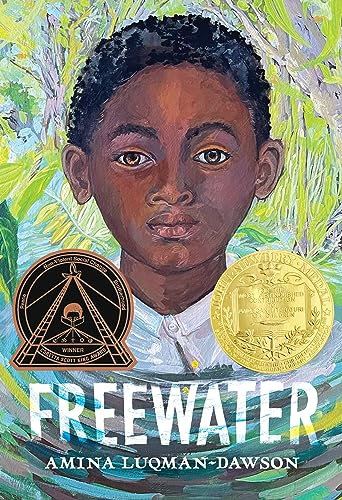
I chose this book to read simply because it was the 2023 Newbery Medal winner and it was available at the library the day I went searching for some books to read. One of my self-imposed reading goals is to read all of the Newbery Medal winners. It has been an interesting journey so far. You can see my progress here: Newbery Winners. I am about 2/3 of the way through reading this book. And I have thoroughly enjoyed it so far. Interestingly enough this book too is about runaway slaves. It is the story of a brother and sister who initially tried to escape with their mother. Their mother due to circumstances was left behind and captured. The two young children find themselves taken in by other escaped slaves who have developed a community living in a nearby swamp. Though Freewater, as it is called, is a fictional place the book is “inspired by the Great Dismal Swamp and the enslaved souls who found refuge and freedom within its confines” which stretched “over fifteen hundred square miles” from Virginia to North Carolina. This was a part of history that I had never heard of before. Even though it is a book written with an audience of young children up to the age of 14, I would highly recommend adults read this as well. It is very rich, deep, and informative.

TO LOVE AS GOD LOVES by Roberta C. Bondi
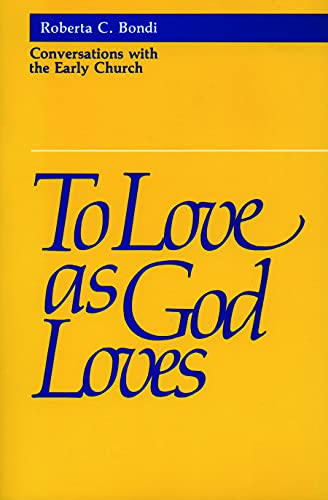
This was an assigned book for one of my Course of Study books for a class on theology. Its subtitle is “Conversations with the Early Church.” And indeed it is. The book’s premise is to be in dialogue with the writings of early church fathers and mothers, many of whom who chose a monastic lifestyle. The book touches on the subjects of Love, Humility, Passions [what we would recognize as the deadly sins], Prayer, and God. It was a really good and informative read that invites one to engage in those subjects in a new way. From the beginning the author states that agreement with the early ancients is not required because our modern day understanding and thinking is going to of course be different. However, their writings still have much truth to teach us and at least spur us to think about things in a different way. The book is both very accessible to an average lay reader but also provides an avenue to topics and thinking for those who want to go deeper in their theological thoughts.

THE FIRST THOUSAND YEARS by Robert Louis Wilken
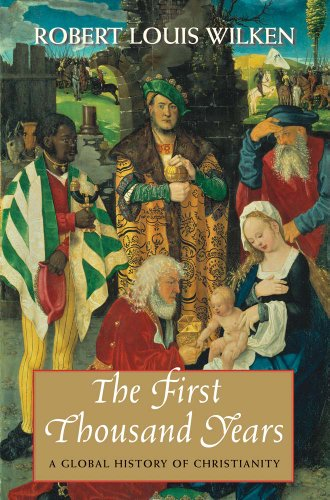
This too was a book assigned for my recent Course of Study class on Theology. Subtitled “A Global History of Christianity,” this may appear at first glance to be quite an imposing (one might say boring) book to tackle. Yet, this one too has a very good balance of deep historical knowledge but is presented in a way that is accessible to most readers. I say most readers only to say that I think one must have at least a passing interest and curiosity into the history of Christianity from its early beginnings to enjoy reading this book. Wilken, like Bondi above, is able to balance a telling of deep rich heritage within a writing syle that is accessible and understandable. Not that it is a light read to take on a beach vacation for light enjoyment. But it is presented in a way that is not overwhelming to a reader who is interested in this subject and ready to engage with it.

To sum up, this is part of what my brain has been engaged in recently. Hope this is helpful to some one. If none of these books spark your interest, maybe my next set of reading material will. I’ll share that when I can. Otherwise, at minimum will you at least take my advice and read something? Please! Society as a whole is reading less and well, I think in many ways it is beginning to show.

Posted in Book Review, Books

MURDER YOUR EMPLOYER: McMASTERS GUIDE TO HOMICIDE by Rupert Holmes

Most murder mysteries start with the victim and then the rest of the story revolves around trying to discover who committed the crime. This book flips that on it’s head. Instead, we start by knowing who the murderers (or deletists as they are referred to) are from the beginning. The mystery, or the question left to be answered, is whether the three deletists will be successful in their endeavors.

The premise of the book is that Dean Harbinger Harrow of McMasters Conservatory, a secretive and secluded educational institution dedicated to the teaching of the homicidal arts, has endeavored to share the accounts of three of their students as case studies. The reader is invited to follow along with Cliff Iverson, Gemma Lindley, and Doria Maye as they each develop their individual thesis (that is how they plan to murder/delete their subject), attend classes to learn best methods and how not to get caught, and then observe the success or failure of the execution of their plan.

Admittedly, a part of me has some qualms about both the fact I enjoyed this book and am suggesting to others to read it as well. My moral code does not in any way endorse the act of murder. And if I thought that this book would indeed drive someone to consider such an action, I would not heartily recommend adding it to one’s reading list.

The fact is, that it is entertaining, engaging and a creative piece of work. The pages are full of puns and wordplays which elicited a lot of smiles, chuckles, laughter, and the occasional groan – which in my world is one of the highest praises for a well crafted pun. This is all done under the guise of what the narrator is purporting to put forth as a serious, sober, professional, and high-minded account and treatise on the purpose of this particular unique educational training.

Additionally, it it’s own darkly comic way the book does indeed pose questions of morality, friendship, loyalty, and obligations to family and friends. Again, I had to do some soul-searching as I found myself often hoping to see the three murderers/deletists successfully graduate by completing their murder/thesis.

Lastly, the twists and turns that take the reader by surprise are also well-crafted. They are plausible, well-timed, and if they were fore-shadowed (I would have to re-read the book to determine if I missed anything) it was done very subtly. I truly found myself not being able – and something rare for me – not even wanting to try to figure out what was coming ahead. I was able to just let myself drift along wherever to plot stream took me.

If you have found yourself stuck in, or at least gravitating to, a particular genre of reading lately, then I highly recommend adding this one to your list. It was an enjoyable trek down a different reading path for me and may be the same for you as well.

Posted in Book Review, Books

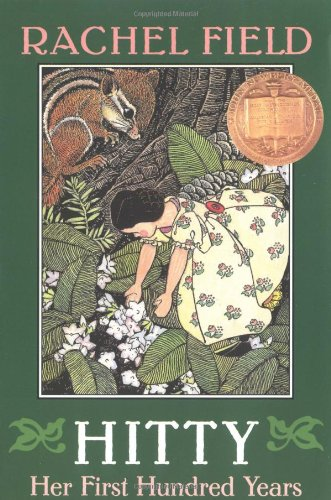
Hitty: Her First Hundred Years by Rachel Field

Hitty is a small wooden doll of about 6 inches with movable arms and legs made from white ash by a peddler for the daughter of a sea captain in the 1820s. Now residing in an antique store in the 1920s, she has put pen to paper and written the memoirs of her various adventures and travels. This book was the 1930 winner of the Newbery Medal given for children’s literature and was inspired by a doll owned by the author Rachel Field.

I can say as a child I probably never would have read this book and would have given the stink-eye to any librarian who suggested it for me. I was not the kind of young girl who played with dolls. I only picked up and read this book because of my goal of reading all the Newbery Medal winners throughout the years. As an adult I am still not a “doll” person, yet I did find this to be an interesting story to read. I could see how the appeal of a tale from a doll’s perspective could be intriguing to a youngster who does like to play with dolls. And perhaps even to an older individual who collects dolls as a hobby.

Written from the first person view of the doll is a creative and imaginative decision by the author. Within the accounts of her adventures the reader is giving small glimpses into changes of society throughout Hitty’s hundred years of life. Over that span of time she travels by carriage, whaling ship, train, and finally in an automobile. She comments on the various thrills, excitement, and fear that each of these evoke from her. She ends up living in places such as Maine, India, New England, and New Orleans. Likewise, as she finds herself passing from owner to owner, mostly by being lost by one and then found by another, she remarks on the changes in clothes that people wear, family dynamics, and social issues of the day. Obviously, none of this is delved into very deeply by the author, but again I found the idea of seeing such changes through the doll as an impartial and outside observer an interesting way to view such things. As a book for children, it at the least might have inspired them to want to learn more about some part of history or culture that is only lightly touched upon within it’s pages.

As a book written in 1929, it must be noted that it does contain some dialect ascribed to certain characters and words ascribed to natives of an island that may seem offensive to modern readers. An astute and mature reader can, or at least in my opinion should, be able to take such things in stride and take into account the always changing attitudes in what is the norm of a certain period of time. I personally, don’t even think these few problematic passages are enough to “corrupt” the thinking or attitude of a young reader today. But I also admit I am not an expert in childhood development nor am I a children’s librarian with experience and knowledge on what books are best to recommend to children.

All I can say is that as an adult reader (and secret aspiring writer) I found the story idea unique and well-written and well-crafted.

To Like or Comment, please click on title and open in a new tab.

Posted in Book Review

THE SECRET CHORD by Geraldine Brooks

The biblical King David of Israel was referred to as a “man after God’s own heart.” In The Secret Chord, Brooks gives us a fictional story that fleshes out the biblical accounts known about David and provides a glimpse of a possible narrative showing how such a man might have lived out that experience. Brooks does here what she does best in her novels. She takes a historical fact or a small known entity and builds a narrative framework that seems so plausible and real that, at least in my case, makes the reader want it to be true. That may seem odd to say, because she does not shy away from the bad and ugly while also writing about the good. Yet, since we all know that life is not all roses, puppies, and kittens, something can’t seem plausible and real unless the unsavory moments and actions are also included and addressed as well. We are shown a man who does indeed desire to serve his God faithfully and to lead God’s people in his role as king. But, we also see a man. A man with typical human desires and wants that sometimes cause him to stumble and make the wrong choices and take the wrong paths.

We see this story primarily through the eyes of Nathan the prophet, through whom God speaks to David. Nathan is one of the king’s closest and most trusted advisors. As Nathan shares his account with us, the reader, he also gives voice to the women in David’s life and how their lives were impacted and shaped by their relationships with him. This includes his mother, his many wives, and even his daughter Tamar who was raped by her half-brother. Each of these relationships also highlight the complexity of the human condition. In giving space for these women to speak for themselves, Brooks really shines in what I mentioned earlier in providing a plausible story that can easily be seen as possessing the possibility to be true.

One must keep in mind that this is not your grandmother’s Bible study book about the life of King David. However, it was fascinating to read about biblical accounts of the exploits of David from an enhanced perspective. And although challenging, I found her choice to use the Hebrew names for people and places quite interesting and enlightening. It added to the aspect of reading about old stories with fresh eyes and a different view.

I do have one caution to provide to any potential reader. Brooks has decided to include in this narrative an idea that has been proposed and discussed elsewhere by biblical scholars and other authors. That is, the portrayal of David and Jonathan’s relationship as being more than just a friendship and as one that included a sexual component between the two of them as well. If that is an idea and portrayal that is super offensive in that you can’t just ignore and dismiss it and instead will let it over-shadow and dis-color the rest of the narrative, then I suggest you avoid reading the book. It is not a major plot line of the story, but it is included and referenced to several times and runs as a tributary that does feed into the river that is the main story.

Brooks is a master weaver in the art of telling a story. While told in a somewhat linear fashion, she also deftly includes backstory and flashbacks at just the right time. Her poetic prose brings to life the people, places, and settings in such vivid detail. She does not disappoint here in The Secret Chord and has once again helped solidify her spot as one of my top five favorite writers of all time.

To Like or Comment, please click on title and open in a new tab.

Posted in Book Review

HOW THE BIBLE ACTUALLY WORKS* by Peter Enns

As Christians, we have to be aware to not fall into the trap of finding ourselves reading more books about the Bible than we find ourselves actually reading the Bible itself. Don’t misunderstand me, there are many enlightening books that give us great insight to the understanding of the Bible. But, for true transformation and for real insight into what God wants for us and expects for us, we must be sure to spend time in the Holy Word.

With that said, this is one of the books about the Bible that is truly worth spending the time with. It gives such great insight into how to approach the Bible that it will definitely enhance anyone’s understanding of how to apply what we read to our daily lives.

The over-arching theme that Enns tries to get across is that the Bible is not a rule book that we can turn to page so-and-so when we need an answer to a particular problem. That idea may be disconcerting to some Christians, but hopefully you’ll come to understand that it is actually a good thing. If you have spent any significant time reading the Bible, you have come to realize that there are passages that seem to contradict each other. Advice or instruction given in one section can be found to to be the total opposite of advice or instruction given in another section. Enns goes on to say that this is not a flaw of the Scripture – it is instead designed that way. It is intended to guide us to a life of wisdom, not to just give out easy answers to our problems.

Enns goes on to posit that “reimagining God for one’s here and now is what Christians and Jews have been doing ever since there have been Christians and Jews” (Page 125.) There again, the idea of reimagining God may be a difficult concept for many. Many will say God is who God is. The idea of reimagining God seems to veer into the dangerous situation of saying man has created the image of God rather than God creating man in the image of God. That is far from what this biblical scholar is suggesting. In fact, as we read the Bible we see God referred to as a King, Shepherd, Fortress, etc. Those were images that were readily understood and accessible to the people of that time. Today, we just as easily refer to God as our co-pilot, or even better as our pilot. If we traveled back in time and tried to use that reference, the people would not understand the reference at all. God can remain holy and remain exactly who He is within the ever-changing ways we as people within our own cultures try to relate to Him.

Enns reminds us that “we are as distant from the time of King David (three thousand years ago, about 1000 BCE) as we are from the far distant future time of 5000 CE”. (Page 7). It is imperative that we approach the Bible trying to understand the context of when a particular book was written and to whom and what culture it was written to and for. In no way does this detract from the power of the Holy Scripture to speak to us today in our here and now. In fact, it is a testament to its power and wisdom that it is able to transcend time and place and still have relevance in our lives and the ability to connect us to God our Creator, Redeemer, and Sustainer.

I highly encourage you to add this book to your reading list to discover how this ancient, ambiguous, and diverse book can lead you to Wisdom.

To Like or Comment, please click on title and open in a new tab.

Posted in Book Review

WICKED by Gregory Maguire

Wicked: The Life and Times of the Wicked…

So, this is definitely not the Land of Oz of my childhood. Well, it is, but from a markedly adult perspective. I have yet to see the musical that this book was based upon. Perhaps, that is why I have a little more positive reaction to the book than some of the reviews I read about it on the LibraryThing website. Seems like for the majority of people who encountered the musical first, they found the book to be a little too dark and little too twisted. Not sure what it says about me, but I liked the dark and twisted aspect of the novel.

In short, this novel gives us the back story of the life of the Wicked Witch of the West and attempts to explain why she is wicked. And, raises the question if she truly is wicked or just mis-understood.

The first section of the book, Munchkinlanders, centers largely around Elphaba’s parents, and their relationship to each other and their actions following the birth of their, not just unique, but absolutely freakish child. Born with green skin and sharp teeth she’s not afraid to use, Elphaba is not like anything they’ve seen before. Her father, Frexspar, is a minister and her mother, Melena, is the granddaughter of the Eminent Thropp, which is the highest ranking family in Munchkinland. Added to the mix is a Quadling named Turtle Heart who carries on an affair with Melena while Frexspar is off on his missionary journeys.

In the second section, titled Gillikin, we meet the future Glinda, initially named Galinda. She is on her way to begin her studies at Shiz University. This young Galinda is not the same sweet, lovable Glinda from my childhood books and memory either. We instead are introduced to a vain, self-centered, and slightly stuck-up individual. By the end of the book we do see a more mature, thoughtful, yet still not perfect personality emerge. The complicated friendship that develops between these two at university work to shape and mold each other into the later adults they both become. Though they don’t maintain constant close contact with each other, there is a bond between them that remains to the end.

There are three more sections titled City of Emeralds, In the Vinkus, and The Murder and Its Afterlife. This is where we meet and follow the exploits of an adult Elphaba. Her early life is consumed by an affair with a married man and former schoolmate, as well as her secretive involvement with others who want to bring about political and social change. The intersection of those two passions end with tragic results which upends her life and ultimately sends her on a quest to redeem and reckon with what she feels she has caused to happen. One would call this time a period of soul-searching, except she does not believe in the existence of a soul. It is also during this time that she reluctantly reconnects with her father and sister, both of whom she is at odds with on religious and social matters.

Maguire explores many spiritual issues throughout the narrative. What is the nature of Evil? What is the soul? Is there an afterlife beyond the physical realm? How best to ask for and bestow forgiveness? Additionally, he touches upon political and social commentary as well. What qualities make for a good ruler? Should various social classes have equal say and rights within larger society? I think it’s fair to say that more questions are posited than are actually answered and solved. Yet, the journey along the way is definitely worth taking. It is not a happy, shiny, rose-colored trek within these pages. Real life happens here. Dark and gruesome deaths take place. Maguire has done a wonderful job of building his own narrative onto an already established fantasy world first created by another. He certainly puts his own stamp and personality onto it, but does so with many nods to the original work, which I believe shows his respect and admiration for that which came before.

To Like or Comment, please click on title and open in a new tab.

Posted in Book Review

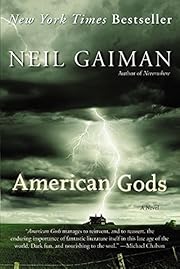
AMERICAN GODS by Neil Gaiman

This is a complicated book review to write, but it seems fitting, I guess, for it is a complicated book to read. I nearly gave up on it halfway through, but decided to ride it out. Though to be fair, I did not read the book under the best of circumstances. The first mistake I made was to read it as an e-book as opposed to a physical book. I am of the camp, that we encounter and digest books different depending on the form in which we consume them. There are certain books that work fine to be read in digital form. For me, this is not one of them. It would have been beneficial for me to actually have been able to riffle through pages at times to return to certain passages for a refresher of characters and what had happened to them previously. My second mistake was to read it in short bits here and there with pronounced lapses in between reading times. This added to the sense of confusion and lack of cohesion I struggled to overcome in holding the wandering narrative together.

The driving force that gave me the impetus to fight through to the end was the fact that I really cared about the main character, Shadow, and wanted to see the completion of his journey. We meet Shadow in prison and find out he is close to being released and able to return to his wife. Tragically, his wife is killed in an automobile accident, which results in his being released several days early, though now with little hope or passion for his future. On the plane ride to attend her funeral, he encounters and is hired as a bodyguard by a mysterious man who calls himself Mr. Wednesday, which sends Shadow on a path that will change how he sees the world and his place in it.

The underlying narrative of the book is an upcoming battle between the old gods brought to America by those who immigrated to its shores and the new gods of media, culture, television, etc. The old gods claim their power is waning because the people are forgetting them and turning to the newer ones. Mr. Wednesday is traversing the country trying to recruit the old gods to join the cause. Shadow is not fully aware of who he is working for and what they are really doing when he first signs on to work with him. He is introduced to this new reality slowly and gradually along the way.

Shadow, at his core, seems to be a decent person intent on trying to do the right thing. It his grief and, yes, the appearances in physical form of his deceased wife that keeps him from asking questions about what exactly he has been drawn into much earlier than he does. Though, as we find out by the end of the book, not all of his choices have been his own and he had lost his agency and control of his life’s heading way before we as the reader have been introduced to him.

It was a little disconcerting as a Christian to see Jesus portrayed, albeit in a brief passing reference, as sad and powerless and placed in the same category as the other old gods. Yet, I read this book as a piece of literature (which it is) and not as a spiritual guidebook (which it is not). So, I was able to not let that bother me. Mostly. I guess the fact I felt I had to mention it means it lingered with me to a degree.

The bottom line is this; though, this will probably never be one of those top of my head recommendations to someone who asks what they should read, I would not actively dissuade someone from approaching it. There were some well-written passages and some very thought-provoking themes throughout. There a quite a few sections that I would be excited to do some close reading of and discuss in setting such as some of my college literature classes. And I could see this book resonating with me at some other time in my reading journey. I feel that it was probably not the right book at the right time in my life.

If you have waded through many of my book reviews, you may have seen before and may see it in this one that perhaps I come off as a little wishy-washy and not truly committed to one side or the other in my opinion on a book. There are few books, especially if I have stuck with them to the end, that I will just outright call a bad book. I have too much of a love of books, respect for those who write them, and awareness that each reader is different and as stated above, the knowledge that certain books resonate with people at different times in their lives. The best I can offer in any of my reviews is to share what my experience within the pages was like.

To Like or Comment, please click on title and open in a new tab.

Posted in Book Review

THE ORPHAN MASTER’S SON by Adam Johnson

One thing I do vividly recall about this book is staying in a state of semi-confusion for at least half, and perhaps up to three quarters of the book. Having said that, it would be easy to conclude that I would not recommend this book to anyone else. That would be a wrong conclusion to make. Confusing? Yes. Meandering? Yes. Yet, in a strange compelling way that state of confusion is what drove me to hang in there and follow the story through to the end. It was not as though it was hard to follow. It was more about trying to discern the reliability of the narrator. There is a sense that you aren’t suppose to believe all the events that are presented.

The setting for the story is North Korea. The book is actually divided into two parts. In Part One we are introduced to Pak Jun Do, who is the Orphan Master’s son. We follow along his journey through various dangerous assigned work positions. Though much of the work he has to do pains his conscience, he always follows through with the orders he is given. Because of this loyalty to the job at hand he is eventually sent to language school to learn English. It is his assignment to a fishing vessel working to intercept and translate radio communications that sets him on a path for a major transformation in his life further on.

In Part Two of the book we encounter an un-named interrogator and his involvement with interrogating a man named Commander Ga who is under suspicion of murdering his wife and children. As this section moves between two separate timelines of the past and present, secrets are revealed and a strange and complex love story unfolds. Here, too, in this section we are bombarded, as are the citizens, with a fictionalized hyped-up version of propaganda telling a different story than the one otherwise being shared.

Admittedly, I am not an expert on North Korea. However, the horrific images of violence, subjugation, and coercion forced upon some of the characters does seem to be to an extent a plausible scenario of life in that country. This is most definitely not a book that is a pleasure to read in that there are few, if any, feel-good moments depicted. But, it does serve as a catalyst to stir quite a few questions. Such as, what is reality vs. fiction? How far would one go for their own personal survival? How far would one go for the survival of those they love?

To Like or Comment, please click on title and open in a new tab.

Posted in Book Review

HER FEARFUL SYMMETRY by Audrey Niffenegger

Niffenegger has the ability to make the un-common common and the impossible possible. Her poetic prose, depth of characters, and attention to detail in describing a setting envelop the reader in that they forget they are being asked to suspend reality. In her first novel, The Time Traveler’s Wife, the reader journeys along with a man who woos, marries, and sustains a relationship in a very non-linear manner. Here, in Her Fearful Symmetry, we effortlessly accept a ghost as a living entity and full character in her own right. This alternate understanding of reality becomes so enveloping that even when it screams out to be read as a horror story, I found myself unable to do so. It is a rare talent that can make the horrific beautiful and mesmerizing.

The story begins when Elspeth Noblin passes away and leaves her London apartment to the twin daughters of her own estranged twin sister. Shortly after moving in, they discover that their aunt is still an occupant as well. Long-held secrets are revealed to some while still with-held from others. The twins must navigate their own relationship as well as friendships and more with Elspeth’s neighbors, of which one was Elspeth’s lover. Each character in their own way must grapple with how to separate their own self-identity from others with whom they are inextricably linked.

To Like or Comment, please click on title and open in a new tab.

Posted in Book Review

THE EVENING AND THE MORNING by Ken Follett

Set in England during the Dark Ages and spanning a decade of time from 997-1007 CE, this is a prequel to the Kingsbridge Trilogy which consists of the following titles:

  • The Pillars of the Earth (1989)
    • World Without End (2007)
    • A Column of Fire (2017)

I first encountered this series when I read The Pillars of the Earth in 2008. I immediately fell in love with it and it catapulted up to one of my all time favorites, which it still remains. Unfortunately, I did not write a review of it at the time, so I may have to “force” myself to re-read it so I can opine on it with due diligence. However, I have enough recollection of it to remember it as a wonderful historical of epic proportions with a narrative to get lost in and characters to both love and hate. World Without End, which I encountered in 2010 lived up to its promise and expectation as a long-awaited sequel. Sadly, I was disappointed in A Column of Fire which I read last year. I would not say it was a horrible read, and I would not totally discourage it from being added to one’s reading list. I just didn’t find it as gripping and engrossing as the other two books.

Now, on to the true subject of this review. Like the others, this story follows the lives of a diverse set of characters from varying stations of life.

First, there is Edgar, a young boatbuilder from a poor, hard-working family. His life as he knows it, and his dreams are shattered when his town, his father, and his lover are destroyed in a Viking raid. Edgar, his mother, and his two brothers must relocate and start over amidst an existence that is even more difficult than it was before. Though poor and containing only the knowledge and training instilled by his father, Edgar possesses an innate intelligence for building and craftwork that goes beyond just boats. Likewise, he has a moral compass that keeps his sight on what is true and just beyond what even the laws of the land at the time may dictate. Yet, his station in life hinders him at times to make a difference in the ways he would like.

Second, we have Ragna, a noblewoman from Normandy who travels to England to marry the man she believes to be her true love and soulmate. She, too, is a compassionate person who strives to render justice to those under her rule with fairness and a tender heart. This requires a delicate balancing act on her part so as to not appear weak and lose the people’s respect for her. This is compounded by her struggles to not be undermined by her husband’s family and the power they fight to maintain for their own selfish wants rather than the benefit of those under their domain.

Third, we encounter a monk named Aldred. Though a member of a small abbey, he harbors hopes to one day to see it evolve into a place of great religious learning. Pious and dedicated to the copying and illustrating of sacred texts, his battles take place against Bishops and other religious leaders who are religious in name and title only, not in their beliefs or interests in what is holy. Power and what having power gives them is the only thing their sight is centered upon.

It is the lives, dreams, and intertwining paths of these three individuals that provide the framework for this book. Like the first book of this series, here too is a grand historical adventure of near epic proportions. I say near epic, because it does draw much closer in scale and quality than did the third book. It definitely sits in the category of those books that I would choose to read again in the future. It’s one flaw, though some may see this as an asset, is that it does follow so closely in format to the other books. In that, the plot lines and story arcs are quite predictable for those who have consumed all of the prior ones. This in no way ruined the reading journey for me. I just found myself able to see where the character’s stories were taking them, so there was some lack of suspense and worry as to how their stories would wrap up. I suppose this is an inevitable outcome of reading a prequel. Yet, I still thoroughly enjoyed the journey because though I knew how their stories would end, there was still the unknowing part of how they would get there. That did make it all worthwhile. Follett lives up to the expectation of this reader, at least, and gives us a very satisfying beginning to a beloved series.

To Like or Comment, please click on title and open in a new tab.